Microcurrent vs RF: which at-home face device should you choose?
· 6 min read · By Alexander
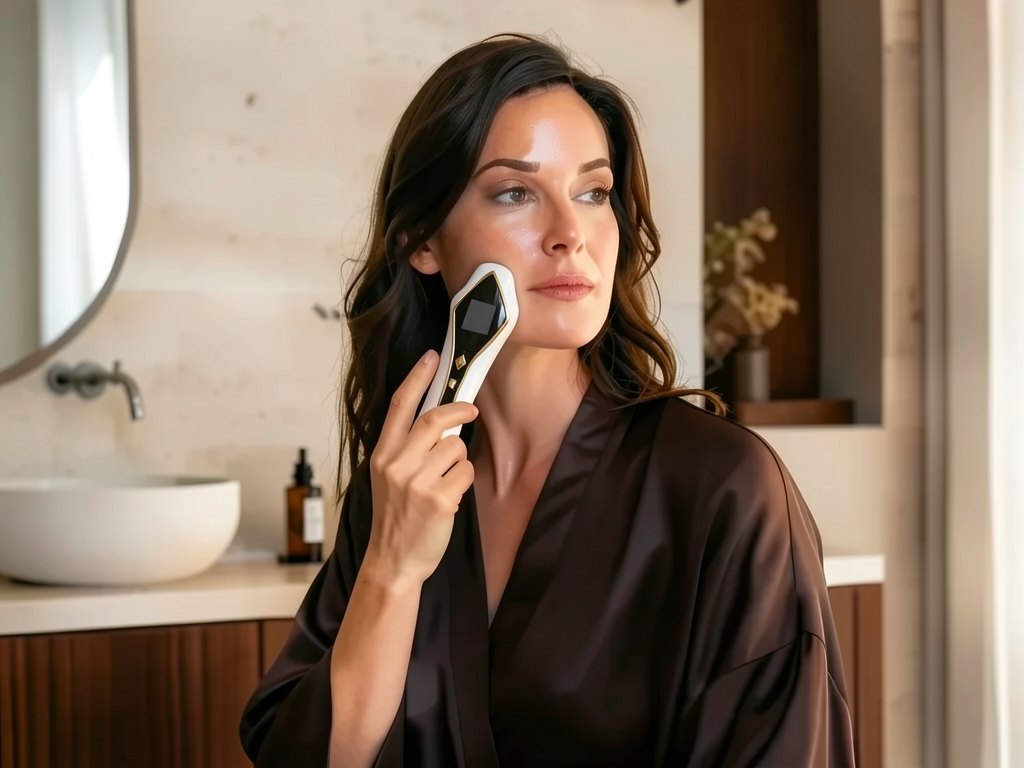
When people start looking for an at-home face device, two words come up again and again: microcurrent and RF (radiofrequency). They are often sold as if they were interchangeable. They are not - and knowing the difference helps you choose a device you will actually use.
Microcurrent: working with the muscles
Microcurrent (and the Japanese MFIP interval pulse) uses a very low current that works with the facial muscles. It is the technology people choose for the contour: cheeks, jawline, the area under the chin. A session feels like a light tingle or nothing at all and needs a conductive gel.
RF: warmth for the feel of firm skin
Radiofrequency warms the deeper layers of the skin to a comfortable temperature. In clinics it is used at high power for skin tightening; home devices use a lower, safe level, so the effect on how firm and smooth the skin feels builds up gradually. A session feels pleasantly warm and also needs gel to glide.
Side by side
A quick comparison:
- Main focus - microcurrent: contour and muscle tone; RF: firmness and texture of the skin.
- Sensation - microcurrent: slight tingle or none; RF: gentle warmth.
- Session length - both 5-15 minutes, three to five times a week.
- Results - both cumulative over weeks; neither is a replacement for medical treatment.
- Contraindications - both: not during pregnancy, with a pacemaker or implanted electronics; RF additionally not over metal implants.
Why many devices combine both
Contour and firmness usually change together, so the most complete home devices put both technologies into one head. Dr. Arrivo Zeus IV combines nine MFIP electrodes with 200 kHz RF, EMS and LED; Zeus II uses multipolar RF through nine gold-plated electrodes; CronuA pairs dual RF with its patented Spiral Pulse and EMS. One session then covers both goals without switching devices.
If your main concern is a softer jawline, start with a device strong on microcurrent/MFIP and EMS. If it is the feel and texture of the skin, look for RF. If you want both - which is most people after 35 - a combined device is simpler and cheaper than two separate ones.
Still unsure?
Browse the microcurrent and RF device pages, compare models in the device guide, or send us a WhatsApp message with your main concern - we will suggest a model and a routine.