Microcurrent facial at home: how it works and how to use a device
· 7 min read · By Alexander
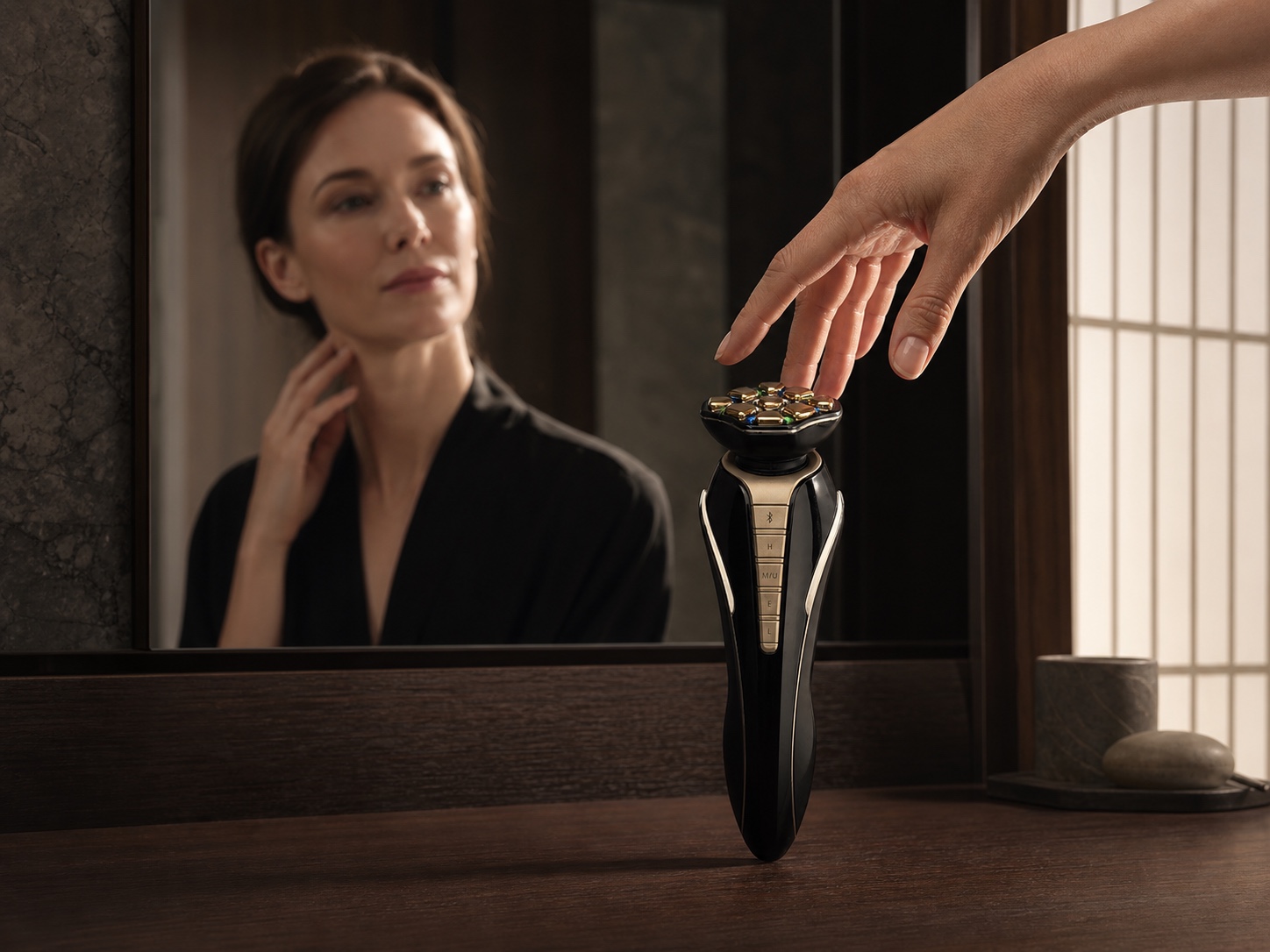
Microcurrent facials started in treatment rooms and moved into bathrooms once devices became small and safe enough for home use. Today "microcurrent face device" is one of the most searched beauty-device terms - and one of the most misunderstood. This guide explains what the technology does, what it does not do, and how to use it so that you actually see a difference.
What microcurrent is
A microcurrent device sends a very low electrical current through the skin between two or more electrodes. The current is far below what you would feel as a shock: most people notice only a slight tingle, a metallic taste or nothing at all. In cosmetic use, the aim is to work with the facial muscles and support a toned, lifted-looking contour - the cheeks, the jawline and the area under the chin.
Japanese devices from ARTISTIC & CO use MFIP, a mid-frequency interval pulse. Instead of a constant flow, the current is delivered in short intervals, which feels comfortable and lets one head work the whole lower face in a few minutes. In practice MFIP belongs to the same family as microcurrent and is used in the same way.
What results are realistic
Right after a session the face often looks fresher and a little more defined, mostly because of the massage effect and the work on the muscles. Lasting changes in how firm and lifted the contour looks build up over weeks of regular use. Results are cosmetic, they vary from person to person, and they last as long as the routine does - like training in a gym.
Microcurrent is not a replacement for surgery, injectables or medical treatment, and no honest seller will promise that it is.
Step-by-step routine (10 minutes)
Three to five times a week, on clean, dry skin:
- Apply a generous layer of conductive gel - microcurrent only works through moisture. A dry spot stops the current and feels prickly.
- Start at the lowest level. Glide slowly from the centre of the chin to the ear, 5-6 passes per side, then from the corner of the mouth to the top of the ear.
- Work the cheekbones from the nose outwards, then the forehead upwards. Keep the device moving and the electrodes flat on the skin.
- Finish with a serum while the skin is still warm. Devices with an electroporation mode (Zeus III, CronuA) have a dedicated step for this.
- Take a photo in the same light on day one, after four weeks and after eight to twelve weeks - the comparison is far more reliable than the mirror.
Microcurrent-only device or a multi-technology device?
Simple microcurrent devices do one thing. Japanese devices such as Dr. Arrivo Zeus IV, Zeus III and Zeus II combine microcurrent-type MFIP with EMS, RF warmth and LED in the same head, so one session covers muscle tone, the feel of firmness and the look of the skin. Compact models such as Clione fit 2.0 bring MFIP into a 52 g device for daily use and travel. If you want to compare models, see our microcurrent device page and the device guide.
Who should not use microcurrent
Do not use microcurrent or EMS during pregnancy, with a pacemaker or other implanted electronics, with metal implants in the treatment area, over broken or irritated skin, or soon after a cosmetic procedure. If you have a medical condition, ask your doctor first. Our article on device safety lists the contraindications in detail.