How to choose your first facial beauty device
· 6 min read
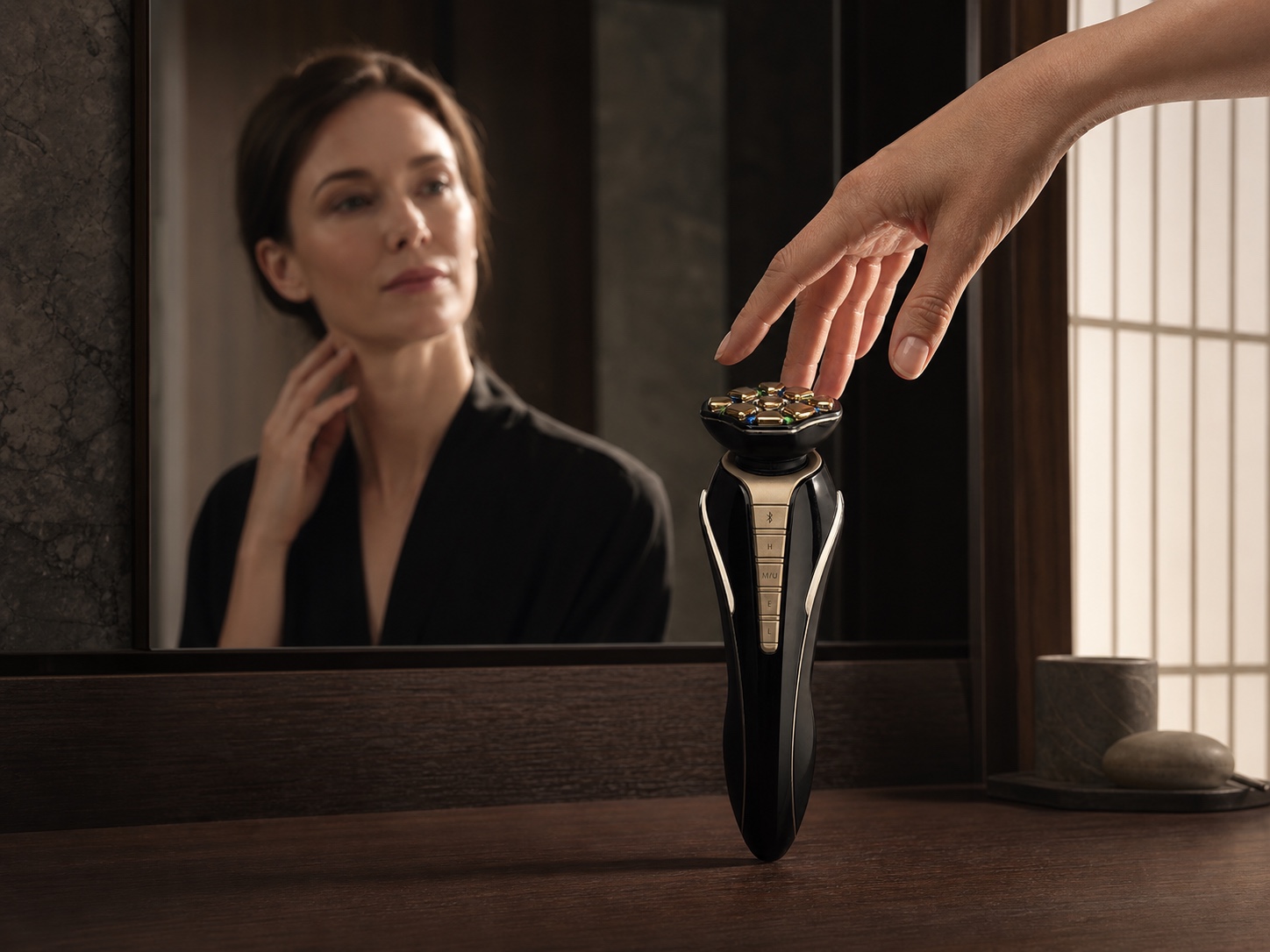
Most people start looking at a facial device because of a single concern: tired-looking skin, a loss of definition along the jaw, or fine lines that have become more noticeable. The hardest part is rarely finding a device - it is working out which technology actually addresses that concern, and which one is simply the most heavily advertised.
Before comparing individual models, it helps to separate beauty-device technology into a few functional groups. Once you know which group answers your concern, the shortlist of relevant devices gets much shorter.
Start from the concern, not the acronym
Puffiness, dullness and dehydration usually respond well to devices built around micro-current and interval-pulse technology, since these are designed to support circulation and lymphatic-style drainage patterns during a short daily routine.
Loss of firmness, a less defined jawline or expression lines are the classic territory for EMS (electrical muscle stimulation) combined with radio-frequency warming, which is why higher-intensity devices bundle both functions rather than offering just one.
Uneven texture and dull tone are more often addressed through LED light modes and ultrasonic cleansing, which are gentler and typically comfortable for daily or near-daily use.
Match intensity to how often you will actually use it
A wired, higher-output device such as those in the Zeus line is built for a focused, intensive routine a few times a week. A compact cordless device is easier to fit into a daily habit, which matters more for long-term results than raw output on a spec sheet.
Be honest about your routine before you buy: a powerful device used twice a month will usually deliver less visible change than a gentler one used consistently.
Check the ideal-use notes and contraindications first
Every product page lists who the device is intended for and the situations in which it should not be used - pregnancy, certain implants, active skin conditions and a handful of other cases. This is worth reading in full before purchase, not after, since it can change which model is appropriate.
A short checklist before you decide
Work through these four questions and the right category of device usually becomes clear:
- What is the single concern I most want to address in the next three months?
- Can I commit to a short routine most days, or only a couple of times a week?
- Do the contraindications for higher-intensity EMS/RF devices apply to me?
- Am I choosing for home use, or does this need to hold up to daily professional use?
Still unsure?
The device guide compares every current model side by side on technology, intensity and ideal use, and the comparison tool on any product page lets you place two or three models next to each other before deciding.